

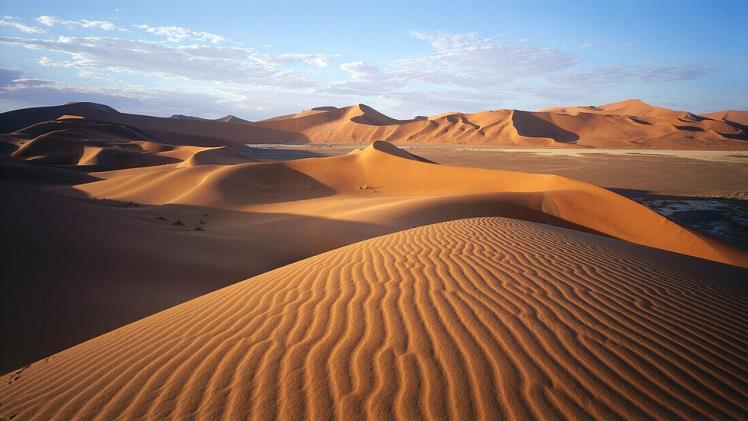
Sossusvlei, the name itself conjures images of towering orange dunes and vast, ancient landscapes, stretching to the horizon under a scorching sun. Located in the heart Jour 16 Sossusviei of the Namib Desert, Sossusvlei is a place of surreal beauty, where the red sand dunes rise like monumental sculptures against a backdrop of deep blue skies. On Day 16 of our journey, we set out to explore this remarkable area, traveling 180 kilometers across the desert to witness the stunning landscapes that have made Sossusvlei a must-see destination in Namibia.
Setting Out: The Desert Road
We begin our journey early in the morning, as the sun rises over the eastern horizon. The desert is still cool at this hour, with a soft, golden light that creates long, stretching shadows across the landscape. The 180 km drive from our previous stop brings us closer to the Namib-Naukluft National Park, a protected area that houses Sossusvlei and its iconic dunes. The road stretches out before us, a ribbon of gravel that winds through the desert, and the stillness of the environment is both eerie and serene.
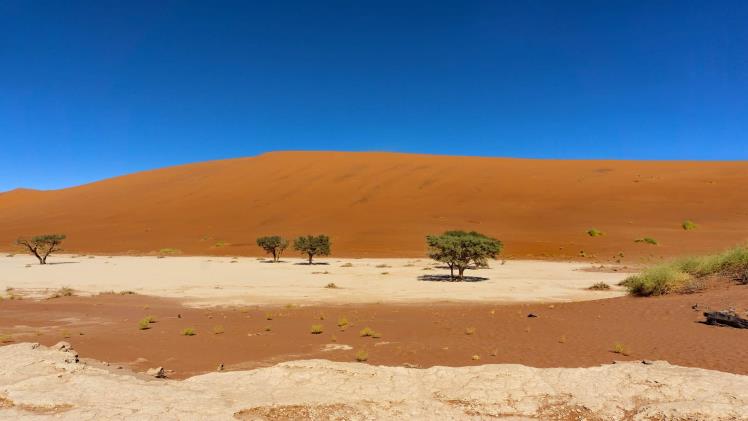
As we drive, the world around us seems to open up, revealing the vastness of the desert. Sparse vegetation—mainly hardy desert plants like the camelthorn and acacia trees—dot the landscape. These plants have adapted to the harsh conditions of the desert, surviving on little water and enduring extreme temperatures. Occasionally, we spot a springbok or an oryx grazing in the distance, their forms stark against the barren land.
The first signs of the towering dunes begin to appear on the horizon, and our anticipation builds. The famous dunes of Sossusvlei are unlike any other in the world, with their reddish-orange color created by the rich iron oxide in the sand. The dunes shift and change over time, sculpted by the wind into undulating forms that are both majestic and mysterious. The sight of these dunes rising from Jour 16 Sossusviei the flat, salt-crusted pans is nothing short of Jour 16 Sossusviei awe-inspiring.
Entering the Namib-Naukluft National Park
After about 100 kilometers of driving, we enter the Namib-Naukluft National Park, a vast area that covers more than 49,000 square kilometers of desert. The park is home to a variety of ecosystems, from the towering dunes of Sossusvlei to the gravel plains and rocky outcrops that are dotted with desert wildlife. The Namib-Naukluft is also home to the oldest known desert in the world—the Namib Desert itself, a place that has been shaped by millions of years of wind, sun, and Jour 16 Sossusviei sand.
The park’s entrance is marked by a sign that signals our arrival into one of the most unique ecosystems on Earth. From here, the road becomes more rugged, winding its way deeper into the park. The excitement builds as we draw closer to our destination, but the beauty of the surroundings makes the journey just as memorable. With every passing kilometer, the terrain shifts subtly, from rocky outcrops to soft, undulating sand dunes that begin to loom larger on Jour 16 Sossusviei the horizon.
Sossusvlei: The Iconic Dunes
As we arrive at the Sossusvlei area, the landscape opens up to reveal a vast, stunningly beautiful expanse. The towering sand dunes of Sossusvlei are the stars of the show. These dunes are the result of millions of years of wind and sand deposition, and they are constantly shifting, creating new patterns and forms. Some of the dunes are among the tallest in the world, reaching heights of up to 300 meters, making them a striking feature of the Namib Desert.
One of the most famous dunes in Sossusvlei is Dune 45, a particularly popular dune that stands at around 170 meters high. It’s a favorite among travelers and photographers because it offers one of the best panoramic views of the surrounding area. Climbing to the top of Dune 45 is a challenging but rewarding experience. The climb is steep, and the sand shifts beneath your feet with every step, but the view from the top is unparalleled. Looking out across the landscape, you can see a sea of dunes stretching out in every direction, their curves and ridges bathed in the warm, golden light of the morning sun.
The colors of the dunes are a striking feature of Sossusvlei. In the early morning light, the dunes are bathed in soft, warm hues of gold and orange, but as the day progresses, the colors intensify into deep reds and burnt oranges. The changing light transforms the landscape, highlighting the texture of the sand and casting long, dramatic shadows. The sheer size of the dunes and the power of nature are evident in every grain of sand, and it’s easy to feel small and insignificant in the face of such magnificence.
Deadvlei: The Ghostly Clay Pan
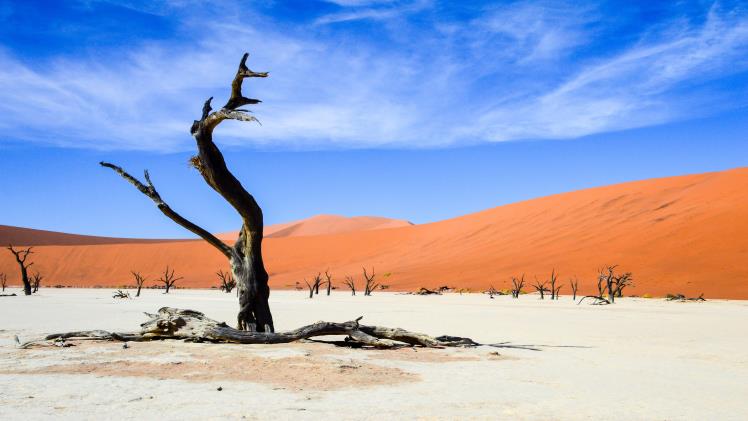
While Sossusvlei is the main attraction, another must-see spot within the area is Deadvlei, a hauntingly beautiful clay pan located nearby. Deadvlei, often referred to as the “Dead Marsh,” is a vast white salt and clay pan surrounded by some of the tallest dunes in the world. The stark contrast between the white pan and the Jour 16 Sossusviei surrounding orange dunes creates a surreal and otherworldly landscape.
Deadvlei is famous for its ancient, dead camelthorn trees, some of which are estimated to be over 900 years old. These trees, which once thrived in the area when it had more water, now stand as skeletal remains, their twisted trunks and branches reaching toward the sky like silent sentinels. The dry, cracked earth beneath the trees adds to the eerie atmosphere, creating a ghostly landscape that is both beautiful and haunting.
The trees in Deadvlei have been preserved due to the extreme dryness of the desert, which has prevented them from decomposing. The landscape here feels frozen in time, and walking among the dead trees gives visitors a sense of the harshness and resilience of life in the desert. The stillness of the place is palpable, broken only by the occasional gust of wind that stirs the sand.
Flora and Fauna of Sossusvlei
Despite its harsh, arid conditions, the Namib Desert is home to a surprising variety of life. The flora and fauna of Sossusvlei have adapted to survive in this extreme environment, creating a delicate balance between life and the unforgiving desert.
Plants in the Sossusvlei area are hardy species that can withstand the intense heat and lack of water. The camelthorn trees found in Deadvlei are among the most iconic plants in the desert, but other species such as the welwitschia plant (which can live for thousands of years) and the desert date palm are also found here. These plants have evolved to conserve water and survive the extreme temperatures.
Wildlife in the area is less abundant, but several species are adapted to the desert environment. The springbok, oryx, and kudu can often be spotted in the area, as well as smaller creatures like the jackal and various reptiles. Birds are also plentiful, with species like the sandgrouse and lappet-faced vulture commonly seen in the skies above.
One of the most remarkable wildlife adaptations is that of the desert-adapted elephants. These elephants have adapted to the arid conditions of the Namib Desert by traveling long distances in search of water, and they are an iconic part of Namibia’s wildlife. Though sightings are rare, the sight of these magnificent creatures moving through the dunes is a powerful reminder of nature’s resilience.
📚 Read more about travel : Dakar, Saly and Ile De Goree
Photography in Sossusvlei
Sossusvlei is a photographer’s dream, with its dramatic landscape providing endless opportunities for stunning images. The combination of the tall dunes, the stark contrast of Deadvlei, and the unique play of light and shadow create a visual spectacle that changes throughout the day. Early morning and late afternoon are the best times for photography, as the low angle of the sun enhances the colors of the sand and creates a sense of depth and texture.
For those looking to capture the full beauty of Sossusvlei, a flight over the dunes provides a bird’s-eye view of the landscape that is truly breathtaking. The aerial view reveals the vast expanse of the Jour 16 Sossusviei desert, with the winding dunes and dry pans forming a mesmerizing pattern from above.
The Desert Sunset
As the day winds down, we make our way back to our lodge, with the sun sinking lower on the horizon. The desert transforms once again, with the dunes taking on a softer, more muted tone as the golden light fades. The desert sunset is a magical moment, as the sand dunes glow with an ethereal light before being swallowed by the night. The temperature drops quickly after sunset, and the cool desert night is a welcome contrast to the heat of the Jour 16 Sossusviei day.
In the quiet of the evening, we reflect on our journey through this ancient and majestic landscape. The experience of standing on top of the dunes, witnessing the beauty of Deadvlei, and feeling the harsh winds of the Namib Desert will remain with us long after we leave.
Conclusion: The Allure of Sossusvlei
Sossusvlei, with its towering sand dunes and otherworldly beauty, is a place unlike any other on Earth. On Day 16 of our journey, we traveled 180 kilometers to witness the majesty of the Namib Desert, and the experience was nothing short of transformative. The desert’s beauty, its vastness.
